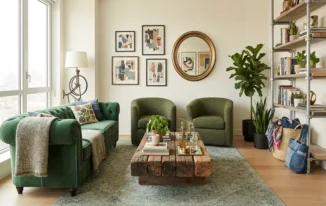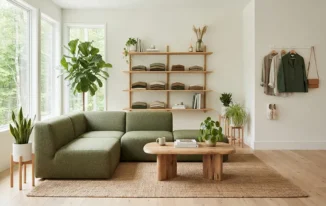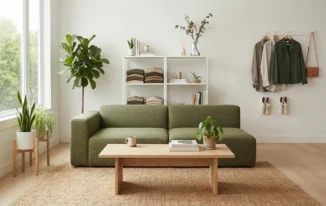

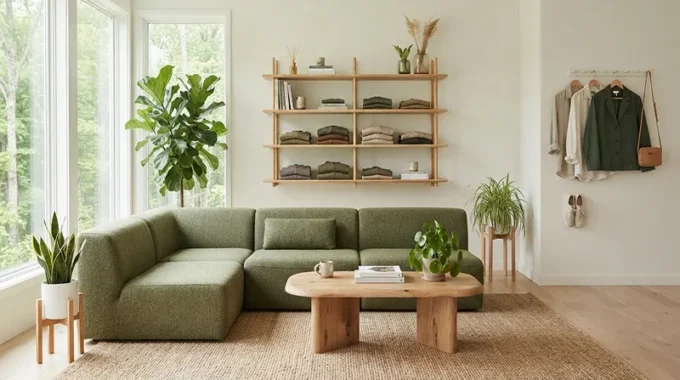
The definition of luxury interior design has undergone a profound transformation. Gone are the days when high-end living room aesthetics relied exclusively on virgin synthetic fabrics, chemically treated veneers, and mass-produced fast furniture. Today, the pinnacle of chic interior styling is eco-conscious design—a seamless fusion of circular manufacturing, biophilic warmth, and uncompromising architectural elegance.
As sustainability shifts from a niche movement to the core standard of modern living, green fashion furniture trends for the living room prove that caring for the planet and curating a breathtaking, high-fashion space are no longer mutually exclusive.
1. Circular Economy and Modular Seating
The conversation around living room seating has moved beyond simple recycling toward true circularity—ensuring that every component of a sofa or armchair can be endlessly repurposed, repaired, or safely returned to the earth.
- Take-Back and Buyback Programs: Leading green furniture brands are pioneering closed-loop models where sofas feature modular components that can be unclicked, repaired, or traded in for credit through brand-sponsored revitalization programs.
- Adaptable Configurations: Circular living room design favors modular sectionals and movable ottomans. Instead of discarding furniture when moving to a new home or changing floor plans, homeowners can reconfigure modular pieces to fit new spaces indefinitely.
- Non-Toxic Material Transparency: Frame construction now avoids toxic glues and formaldehyde-laden particle boards, relying instead on responsibly harvested structural woods, natural latex, and biodegradable cushions.
2. Biophilic Integration and Raw Organic Woods
Biophilia—our innate human tendency to seek connections with nature—dominates contemporary living room layouts, anchoring spaces with raw, unmasked natural elements.
- Honoring Natural Imperfections: Perfection is being replaced by authenticity. Coffee tables, media consoles, and accent shelves highlight live edges, natural knots, and unique grain patterns that celebrate the organic history of the tree.
- Salvaged Urban Lumber: Sourcing wood from fallen city trees or dismantled historic buildings is becoming a badge of honor in luxury design, drastically reducing logging pressures while delivering one-of-a-kind character.
- Zero-VOC Plant-Based Finishes: Harsh polyurethane varnishes are out; natural hardwax oils, linseed oils, and plant-based lacquers are in. These finishes allow the wood to breathe while keeping indoor air pure and toxin-free.
3. Regenerative Textiles and Bio-Based Materials
Living room upholstery is undergoing a material revolution, stepping away from petroleum-based polyester and acrylic velvets toward agricultural and laboratory innovations.
- Regenerative Agriculture Wool & Linen: Textiles sourced from farms practicing regenerative grazing help restore soil health and sequester carbon, resulting in rich, textured bouclé, heavy linen, and wool fabrics that feel as luxurious as they are ethical.
- Emerging Bio-Fabrics: Cutting-edge designers are utilizing next-generation materials like mushroom mycelium leather, pineapple leaf fibers, and hemp-blend velvets. These alternatives mimic the suppleness of luxury leather and velvet without the ecological toll.
- Earth-Inspired Colorways: The palette for sustainable upholstery reflects the natural world—think terracotta, olive sage, raw oat, deep moss, and warm sand—creating an instantly grounding atmosphere.
4. Sculptural Minimalism and Multi-Functional Longevity
Fast furniture encourages rapid consumption and quick disposal. The counter-trend is sculptural minimalism—pieces built with such striking architecture and durable construction that they are meant to be passed down through generations.
- Artisanal Curves and Organic Shapes: Living rooms are softening up. Sofas, coffee tables, and accent chairs feature rounded arches, fluid silhouettes, and sculptural legs that double as functional art pieces.
- Multi-Functional Purpose: Sustainable design emphasizes versatility. Sleek storage ottomans, nesting coffee tables, and convertible daybeds maximize utility in compact footprints, reducing the total number of items needed in a home.
How to Integrate Green Trends Into Your Living Room
You don’t need to throw out your entire living room setup to embrace eco-conscious design. Transition mindfully with these steps:
- Layer with Sustainable Textiles: Swap out synthetic throw pillows and fast-fashion blankets for organic cotton, raw linen, or regenerative wool alternatives.
- Invest in One Statement Eco-Piece: Make your next major purchase—like a modular sofa or a reclaimed wood coffee table—from a transparent, certified green brand.
- Prioritize Indoor Air Quality: Ensure new purchases carry certifications like GREENGUARD Gold or FSC, protecting both global ecosystems and your personal living environment.
Trend Summary
Eco-conscious green furniture design trends represent the ultimate evolution of interior style. By merging circular manufacturing, biophilic rawness, and timeless sculptural silhouettes, today’s living rooms achieve a sophisticated aesthetic that honors both personal well-being and planetary health.
3 Core Principles for a Sustainable Living Room:
- Choose Circularity: Prioritize modular, repairable pieces designed for longevity.
- Celebrate Raw Materials: Opt for certified woods and organic, non-toxic textiles.
- Buy Less, Choose Better: Treat every addition to your space as an investment in mindful, lasting design.