
The concept of “fast fashion” has faced well-deserved scrutiny, but its counterpart—fast furniture—remains a silent contributor to global waste. Millions of flat-pack, petroleum-based, short-lived furniture pieces end up in landfills every year, releasing toxins and driving unnecessary deforestation.
Fortunately, a major aesthetic and ethical shift is underway. Sustainable “green fashion” furniture is redefining eco-friendly homes, proving that environmental responsibility does not require sacrificing high-end style. By investing in reclaimed materials, renewable botanicals, non-toxic textiles, and circular design principles, you can create a home that is as healthy for the planet as it is stunning to look at.
1. Reclaimed and Upcycled Timber: Breathing New Life Into Old Wood
When it comes to sustainable furniture, skipping newly felled lumber in favor of reclaimed wood is one of the most powerful choices you can make.
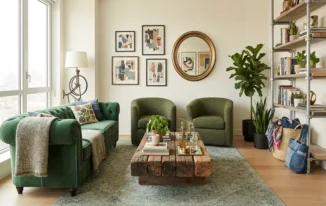
- Salvaged History: Reclaimed timber is sourced from old barns, abandoned warehouses, historic factories, and fallen trees. Each dining table, console, or bookshelf comes with a rich, unrepeatable patina of knots, saw marks, and deep wood grain.
- Combatting Deforestation: Using reclaimed wood requires zero new tree harvesting, actively reducing carbon emissions and preserving vital forest ecosystems.
- Certification Standards: If you do purchase new wooden furniture, always look for FSC (Forest Stewardship Council) certification, which guarantees that the wood comes from responsibly managed, legally harvested forests that maintain biodiversity.
2. Biodegradable and Renewable Materials: Bamboo, Rattan, and Cork
Traditional furniture often relies on heavy plastics and metal alloys that take centuries to decompose. Modern green design looks to fast-growing, renewable botanicals.
- Moso Bamboo: Unlike hardwood trees that take decades to mature, bamboo is a grass that can grow up to several feet in a single day and reaches full maturity in just 3 to 5 years. It is exceptionally durable, lightweight, and versatile for flooring, cabinets, and minimalist furniture frames.
- Woven Rattan and Seagrass: Bringing natural fiber seating and accent chairs into your home introduces organic warmth and texture while supporting biodegradable craftsmanship.
- Naturally Insulating Cork: Harvested by stripping the bark of cork oak trees without harming the living tree, cork makes for incredible, naturally acoustic, and cushioned furniture tiles, stools, and wall panels.
3. Non-Toxic Textiles and Plant-Based Upholstery
What lies inside your sofa matters just as much as the frame. Many conventional upholstered items are packed with synthetic chemical flame retardants, petroleum-based foams, and synthetic fabrics that off-gas volatile organic compounds (VOCs) into your indoor air.
- Organic Linen, Hemp, and Cotton: Choose upholstery fabrics made from certified organic, pesticide-free fibers. Hemp canvas and linen are remarkably durable, require minimal water to grow, and soften gracefully over time.
- Natural Latex and Coconut Coir: Swap petroleum polyurethane foam for natural latex (harvested from rubber trees) or coconut coir fibers. These provide exceptional, breathable cushioning without toxic chemical additives.
- Reliable Certifications: Look for OEKO-TEX Standard 100 certification on textiles to ensure the fabric is completely free from harmful levels of toxic chemicals.
4. The Circular Economy: Modular and Repairable Design
True sustainability means designing furniture with its entire lifecycle in mind—keeping products in use for decades and out of the trash heap.
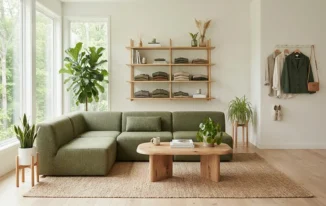
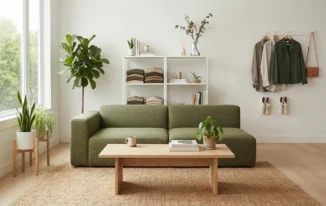
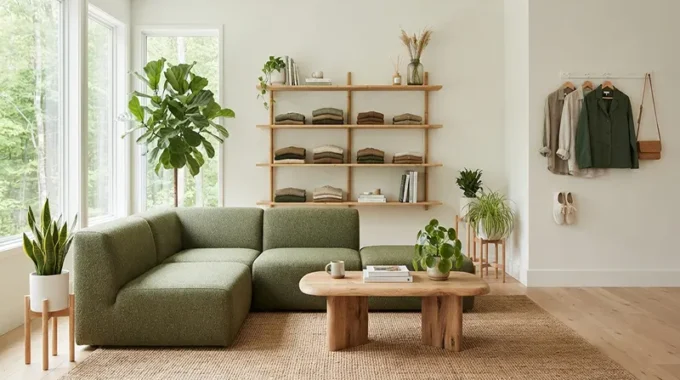
- Modular and Adaptable Pieces: Invest in modular sofas and shelving units that can be reconfigured, expanded, or downsized as your living situation changes, rather than buying entirely new furniture when you move.
- Design for Disrepair (and Repair): Look for furniture brands that offer replacement parts, removable and washable cushion covers, and repairable joinery. A sofa with a lifetime warranty on its frame prevents generational waste.
- The Vintage and Antique Revival: The greenest piece of furniture is the one that already exists. Shopping vintage and antique items keeps high-quality craftsmanship in circulation while adding instant eclectic character to your home.
5. Biophilic Living: Integrating Indoor Greenery with Eco-Furniture
Sustainable furniture naturally complements a biophilic design approach—blurring the lines between indoor living spaces and the natural world.
- Living Plant Integration: Pair your eco-friendly wooden shelves and natural fiber seating with abundant indoor greenery, living moss panels, and natural stone accents.
- Maximizing Natural Light: Position furniture to optimize natural daylight, reducing the need for artificial daytime lighting and lowering your household’s overall energy consumption.
Eco-Shopping Checklist
Transitioning to sustainable green fashion furniture is an empowering way to align your interior design choices with your environmental values. By prioritizing longevity, ethics, and natural materials, your home becomes a true sanctuary for both you and the earth.
3 Golden Rules for Buying Sustainable Furniture:
- Demand Transparency: Buy from brands that openly disclose where their materials are sourced, how their workers are treated, and what certifications their products hold.
- Prioritize Durability Over Trends: Choose timeless designs and sturdy, repairable materials that will last for decades rather than disposable fast-furniture pieces.
- Check the Labels: Look for gold-standard certifications like FSC-certified wood, OEKO-TEX textiles, and GOLS (Global Organic Latex Standard) to ensure your eco-friendly claims are backed up.